
Phone No
orthodrhimanshugupta@gmail.com
Location
Room No. 187, Max Hospital, W-3, Ashok Marg, near Radisson Blu Hotel, Sector-1, Vaishali, Ghaziabad, Uttar Pradesh 201010
Phone No
orthodrhimanshugupta@gmail.com
Location
Room No. 187, Max Hospital, W-3, Ashok Marg, near Radisson Blu Hotel, Sector-1, Vaishali, Ghaziabad, Uttar Pradesh 201010
Table of Contents
Toggle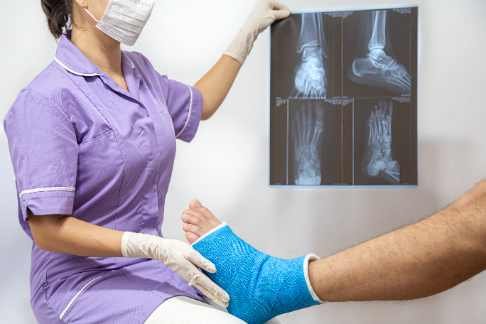
A hairline fracture ankle injury is often underestimated because it doesn’t always look as dramatic as a full break. There’s no visible deformity, you can sometimes still put weight on it, and the pain may feel more like a bad sprain. But left untreated, a hairline fracture ankle can worsen, heal incorrectly, or lead to long-term joint problems. This guide explains exactly how serious this injury is, how to recognize it, how it’s classified, and what recovery really looks like.
A hairline fracture ankle, also known as a stress fracture, is a thin crack in one of the ankle bones caused by repetitive stress or a sudden impact that isn’t strong enough to cause a complete break. Unlike a traumatic fractured ankle from a fall or accident, a hairline fracture often develops gradually from overuse — common in runners, dancers, and athletes who repeatedly load the joint without adequate recovery time.
Because the bone isn’t fully broken, a hairline fracture ankle is sometimes mistaken for a sprain in the early days. This is exactly why understanding the symptoms and getting proper imaging matters — misdiagnosis can delay healing and increase the risk of complications.
Recognizing fractured ankle symptoms early is the first step toward proper treatment.
Common warning signs of a hairline fracture ankle include:
● Dull, aching pain that worsens with activity and improves with rest
● Localized tenderness when pressing directly on the bone
● Mild to moderate ankle fracture swelling, often appearing gradually rather than immediately
● Bruising that may develop a day or two after the injury
● Difficulty bearing full weight, especially during push-off while walking
● Pain that lingers for more than a few days without improving
If these fractured ankle symptoms persist beyond 48–72 hours, it’s a strong signal to get an X-ray rather than assuming it’s just a sprain.
The seriousness of a hairline fracture ankle depends on its location, size, and how much stress continues to be placed on it. In many cases, it’s a manageable injury that heals well with rest and proper support. However, ignoring it can allow the crack to widen into a complete fractured ankle, especially if you continue running, jumping, or standing on it for long periods.
Certain hairline fractures — particularly those near joint surfaces or involving specific bones like the navicular — carry a higher risk of poor healing and are considered more serious because they have a naturally reduced blood supply. This is why a proper diagnosis matters more than guessing based on pain level alone.
Doctors use ankle fracture classification systems to determine severity and guide treatment decisions. Broadly, ankle fractures fall into these categories:
Thin cracks caused by repetitive load, typically without displacement of the bone.
An avulsion fracture ankle injury occurs when a small fragment of bone is pulled away by a tendon or ligament during a sudden twist, rather than from direct impact. This type is often confused with a standard sprain since it involves similar mechanics.
Where the broken bone has shifted out of alignment, usually requiring surgical correction.
The bone is cracked but remains in its normal position, often treatable with immobilization alone.
Understanding this ankle fracture classification helps set realistic expectations for treatment intensity and recovery duration.
Doctors typically combine a physical exam with imaging to confirm a hairline fracture ankle:
1. Physical examination – Checking for point tenderness, swelling patterns, and range of motion.
2. X-ray – The first imaging step, though hairline fractures are sometimes too subtle to appear immediately.
3. MRI or bone scan – Used when an X-ray looks normal but symptoms strongly suggest a fracture, since these methods pick up stress fractures earlier.
4. CT scan – Occasionally used for a more detailed view of complex fracture patterns, especially when the exact location of an ankle bone fracture needs to
be mapped precisely before deciding on treatment.
Getting an accurate diagnosis early prevents a mild hairline crack from progressing into a more serious, displaced fractured ankle.
Ankle fracture treatment for a hairline crack is usually more conservative than for a complete break, but it still requires discipline and patience.
The cornerstone of ankle fracture treatment for hairline fractures is reducing weight-bearing stress. This may involve a walking boot, cast, or crutches for several weeks depending on severity.
An ankle brace for fracture recovery helps stabilize the joint while allowing controlled movement as healing progresses. A good ankle fracture support device reduces the risk of re-injury during the transition back to normal activity.
Ice, elevation, and anti-inflammatory medication help control ankle fracture swelling in the early stages, especially within the first week.
Rarely needed for true hairline fractures, but may be considered if the crack progresses toward a displaced fracture or fails to heal with conservative care.
Not all supports are created equal. The right ankle brace for fracture recovery depends on the healing stage:
● Rigid walking boots are typically used in the first few weeks to fully immobilize the joint.
● Semi-rigid ankle fracture support braces are introduced as healing progresses, offering protection while allowing gradual movement.
● Compression sleeves are useful later in recovery for light activity and swelling control.
Choosing appropriate ankle fracture support at each stage — rather than switching too early — plays a major role in avoiding setbacks.
Fractured ankle recovery time for a hairline fracture generally falls into these ranges:
● Mild stress fracture: 4–6 weeks with reduced activity
● Moderate hairline fracture: 6–8 weeks, often with a walking boot
● Avulsion fracture ankle injuries: 6–10 weeks depending on fragment size and location
● Fractures with delayed diagnosis or continued stress: 10–12 weeks or longer
Return to sports or high-impact activity should always be guided by a doctor’s clearance rather than pain levels alone, since a bone can look and feel stable before it’s fully healed.
● Follow weight-bearing restrictions exactly as prescribed
● Keep the leg elevated to manage ankle fracture swelling, especially in the first two weeks
● Maintain adequate calcium and vitamin D intake to support bone healing
● Avoid returning to running or jumping activities until cleared by imaging
● Use your ankle brace for fracture support consistently during the recovery window, not just when symptoms flare
Most cases of a hairline fracture ankle don’t come from a single dramatic accident — they build up over time. Understanding the common causes can help you avoid a repeat injury once you’ve healed:
● Repetitive impact activity such as long-distance running, dancing, or basketball, where the bone doesn’t get enough recovery time between sessions
● Sudden increases in training intensity, like ramping up mileage or switching to a harder training surface too quickly
● Poor footwear that doesn’t provide adequate shock absorption or ankle support
● Weak bone density, which is more common in athletes with inadequate nutrition or in older adults
● Improper landing mechanics during jumping sports, which places uneven stress on specific ankle bones
Identifying which of these factors contributed to your hairline fracture ankle is an important part of preventing it from happening again after you’ve recovered.
Any suspected hairline fracture ankle that doesn’t improve within a few days, or that involves significant swelling, bruising, or inability to bear weight, should be evaluated promptly. Early diagnosis dramatically improves outcomes and shortens the overall fractured ankle recovery time, while delayed treatment increases the risk of the crack progressing into a more complex injury.
Not exactly. A hairline fracture is a thin, often non-displaced crack in the bone, while a “broken ankle” usually refers to a more complete or displaced fracture. Both still require proper diagnosis and care, since an untreated hairline crack can worsen over time.
Some people can bear partial weight, but doing so without support increases the risk of the crack widening. It’s best to limit weight-bearing until a doctor confirms the severity of the fracture.
For a hairline fracture, recovery typically ranges from 4 to 8 weeks, though more serious or delayed-diagnosis cases can take up to 12 weeks or longer.
A sprain involves stretched or torn ligaments, while a hairline fracture involves an actual crack in the bone. Symptoms can overlap significantly, which is why imaging is often needed to tell them apart.
Yes, in most cases. An appropriate ankle brace for fracture recovery helps stabilize the joint, reduces the risk of further injury, and supports proper healing as you gradually return to normal activity.

EXCELLENTTrustindex verifies that the original source of the review is Google. Very satisfied with my treatment for knee pain. Its very painful for me to walk. But I am under treatment with dr. Himanshu Gupta and now I am perfectly fine. No pain, and now I can walk properly without any pain. Dr. Himanshu Gupta is very well trained doctor I've ever seenPosted on GoogleTrustindex verifies that the original source of the review is Google. I consulted Dr Himanshu Gupta for the Mother's knee pain and I am extremely grateful for the excellent care I received. Dr. Gupta was highly professional, knowledgeable, and made me feel at ease throughout the process. The hospital staff was attentive, ensuring a smooth and comfortable experience. It had a clean and friendly environment.Posted on GoogleTrustindex verifies that the original source of the review is Google. Dr. Gupta’s diagnosis has always been spot-on, and his approach to treatment was both thorough and reassuring. He took the time to patiently explain every step of the process, answering all our questions with clarity and empathy—something that made my mother feel confident and cared for throughout her recovery. Highly recommend Dr. Himanshu Gupta to anyone looking for an experienced and genuinely caring orthopedic specialist.Posted on GoogleTrustindex verifies that the original source of the review is Google. My mother operated here for her knee replacement. I totally recommend to visit here for ortho related problems. The results are amazing Best experience ever. Very satisfied with the robotic knee surgery. Staff is very professional and helpful. Dr. Himanshu Gupta is highly skilled in Robotic surgery. And so supportive during my mother's treatmentPosted on GoogleTrustindex verifies that the original source of the review is Google. Dr. Himanshu Gupta is an amazing orthopaedic. He treated my ACL problem with great care and expertise. His professionalism, explanation of treatment, and follow-up care were top-notch. Highly recommend for anyone needing orthopaedic care. My Surgery was also went smooth and successful Hospital's Pre & Post Care was very excellent. Staff was also so helpful during my stay.Posted on GoogleTrustindex verifies that the original source of the review is Google. I have expressed high satisfaction with Dr. Himanshu Gupta's friendliness, treatment, and explanation of health issues.Posted on GoogleTrustindex verifies that the original source of the review is Google. Dr. Himashu Gupta , Amicare Hospital, Indirapuram is the one of the best Doctor of Orthopaedic and also with loveble baheviour to every patient with care treatments, All the decoram of this Hospital have very fine and reasonable to treatment. All Staff of Hospital is too cooperative with good human behaviour.Posted on GoogleTrustindex verifies that the original source of the review is Google. Dr.Himanshu Gupta is very knowledgeable Doctor . My Knee surgery was successfully .Posted on GoogleTrustindex verifies that the original source of the review is Google. Good check up and doctor checkup is technique is perfectPosted on GoogleTrustindex verifies that the original source of the review is Google. Dr. Himanshu has deep knowledge of his subject. He is very caring and explains the diagnosis and treatment to the patient. My wife was under his treatment several times and got quick relief. Amicare hospital has good facilities and gives quick service under one roof.

Dr. Himanshu Gupta is a highly trusted and skilled orthopedic specialist, known for delivering expert care and personalized treatment.
orthodrhimanshugupta@gmail.com
Room No. 187, Max Hospital, W-3, Ashok Marg, near Radisson Blu Hotel, Sector-1, Vaishali, Ghaziabad, Uttar Pradesh 201010
Copyright 2026 © All Right Reserved
Fill the form and our team will get back to you shortly.